Widows Empowerment through Sustainable Livelihood Program
Widowed women in Pakistan, particularly in semi-urban and rural communities, endure profound socio-economic marginalization, exacerbated by natural disasters such as floods, earthquakes, and droughts that frequently affect the region. The loss of a spouse, often compounded by disaster-induced devastation, results in abrupt income disruption, destruction of assets, loss of productive resources, and heightened vulnerability to poverty, alongside social exclusion and emotional distress. In disaster-affected areas, widows face acute livelihood challenges, including damaged or lost homes, agricultural lands, and small enterprises, coupled with restricted mobility, limited access to relief resources, and inadequate market linkages, which further impede recovery and sustainable income generation. Additionally, skill-based constraints stemming from low literacy levels, absence of prior vocational training, and cultural barriers to participation in formal employment leave many widows ill-equipped to rebuild their livelihoods or engage in resilient economic activities.
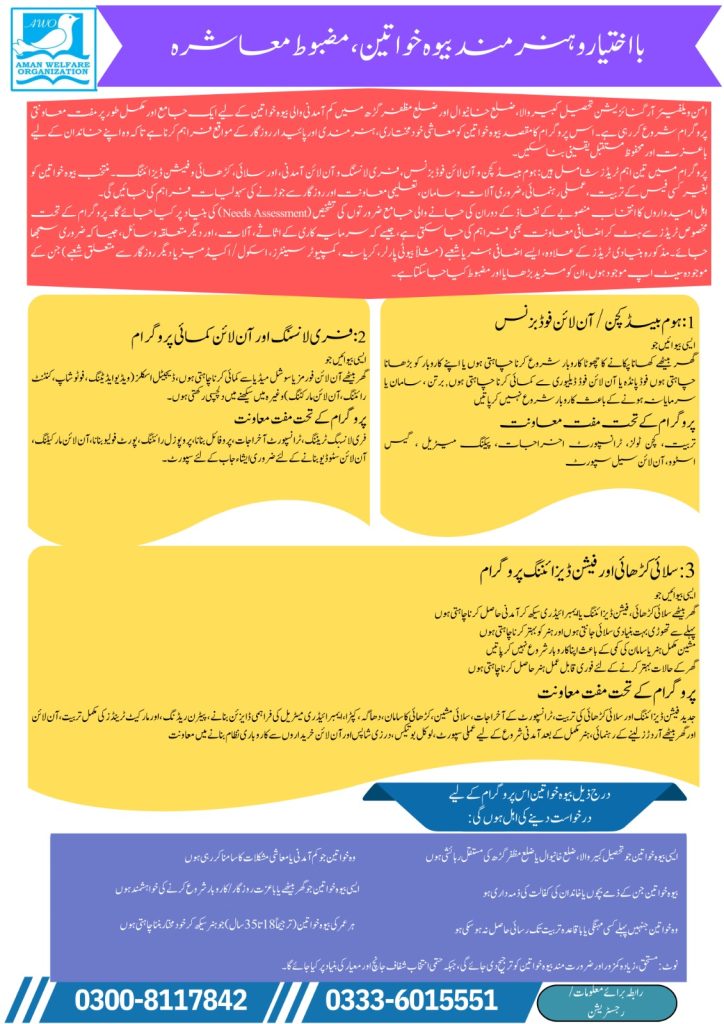
The Widows Empowerment through Sustainable Livelihood Program, implemented by Aman Welfare Organization (AWO), directly addresses these intertwined challenges by equipping disaster-affected and vulnerable widows with market-oriented vocational skills, entrepreneurship training, and comprehensive livelihood support packages in tailoring, home-based food businesses, and freelancing. Through the integration of practical skills development, digital literacy enhancement, and local market linkages, the project fosters economic resilience, promotes poverty alleviation, advances gender equality, and supports women’s economic empowerment, aligning with Sustainable Development Goals 1 (No Poverty), 5 (Gender Equality), and 8 (Decent Work and Economic Growth).